-
Facing the Future of Emerging Contaminants: What We Learned at the EmConSoil session at AquaConSoil 2025
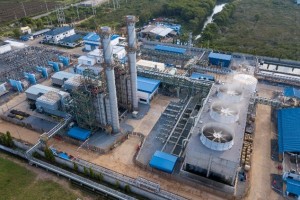
At the 2025 AquaConSoil conference in Liège, the EmConSoil initiative hosted an interactive session that dove deep into the questions: How do we prepare for contaminants that science is only beginning to understand? And what happens when legacy pollution meets updated standards and public concern? Learn more about the outcomes of this session.
Read more about "Facing the Future of Emerging Contaminants: What We Learned at the EmConSoil session at AquaConSoil 2025"
-
Phosphate-enabled mechanochemical PFAS destruction for fluoride reuse
PFAS persistence in the environment has led to widespread contamination, affecting our drinking water, food, and air. PFAS removal from the environment remains a challenge. Current PFAS degradation methods include chemical- and photochemical-initiated oxidation and reductions processes, mechanical and base-assisted destruction and incineration, all of which produce fluorine waste. In this study, researchers developed a new technique to breakdown PFAS, whereby it not only breaks down these harmful chemicals but also recycles valuable fluorine, turning an environmental challenge into a sustainable solution.
Read more about "Phosphate-enabled mechanochemical PFAS destruction for fluoride reuse"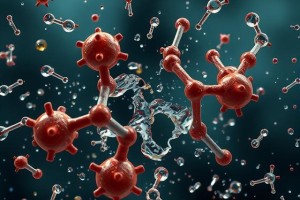
-
Biodegradation of polypropylene microplastics by Bacillus pasteurii isolated from a gold mine tailing
Microplastics (MPs) are persistent pollutants formed from plastic degradation, with significant environmental impacts, particularly in soil ecosystems. Despite more MPs entering terrestrial environments than oceans, research on their biodegradation in soil remains limited. Certain microorganisms, including fungi and bacteria, have shown potential in breaking down MPs, though degradation rates vary by plastic type. This study explores the use of bacteria Bacillus pasteurii in combination with the microbially induced calcium carbonate precipitation (MICP is a technique that uses the metabolic action of microorganisms to produce CO32- which combines with free Ca2+ to form CaCO3 precipitation) technique to enhance MP degradation, aiming to provide insights for soil pollution management.
Read more about "Biodegradation of polypropylene microplastics by Bacillus pasteurii isolated from a gold mine tailing"
-
The Critical Role of Commercial Analytical Reference Standards in the Control of Chemical Risks
Risk governance aims to reduce exposure to harmful chemicals in order to protect human health and the environment. It involves both regulatory actions (such as laws and directives) and voluntary measures taken by companies. Risk assessment, which combines hazard and exposure data, helps to prioritize chemical risks and assess the effectiveness of governance measures. Chemical regulations often require companies to provide detailed data on their substances, such as production volumes, potential exposure, and hazardous properties, based on high-purity reference standards. However, reference standards are not always available for all chemicals, especially for byproducts, metabolites, or lesser-known substances. The lack of available standards, such as for many PFAS chemicals, complicates risk assessment and regulatory enforcement.
Read more about "The Critical Role of Commercial Analytical Reference Standards in the Control of Chemical Risks"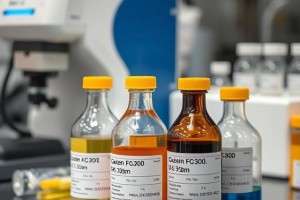
-
Impacts and mechanisms of biochar on soil microorganisms
Biochar is an eco-friendly material with strong adsorption properties, widely used for improving soil and water quality. It enhances soil conditions and supports microbial communities by increasing microbial abundance, improving nutrient content, and providing a suitable habitat. Biochar’s effects depend on various factors, such as the raw material used, application dose, pH, and pyrolysis temperature. It helps retain nutrients, reduces nutrient loss, and improves water retention. Biochar also promotes soil aggregation by supporting fungal and actinomycete growth, which aids in nitrogen cycling and other essential soil processes.
Read more about "Impacts and mechanisms of biochar on soil microorganisms"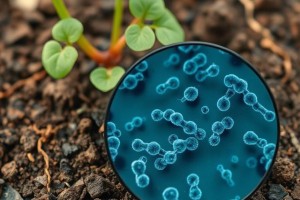
-
Release of poly- and perfluoroalkyl substances from AFFF-impacted soils: Effects of water saturation in vadose zone soils
This study investigates the release of PFASs from aqueous film-forming foam (AFFF)-impacted soils under constant and variably saturated conditions. PFASs, used in fire suppression foam, contaminate soils and pose long-term groundwater risks. Previous research shows that air-water interfaces in unsaturated soils complicate PFAS release. The study used field-collected vadose zone soils in column experiments with artificial rainwater, flushing under both constant and variably saturated conditions. Effluents were analyzed for a range of PFASs to evaluate how unsaturated conditions affect PFAS flux to groundwater. The findings aim to improve understanding of PFAS release dynamics in the unsaturated zone.
Read more about "Release of poly- and perfluoroalkyl substances from AFFF-impacted soils: Effects of water saturation in vadose zone soils"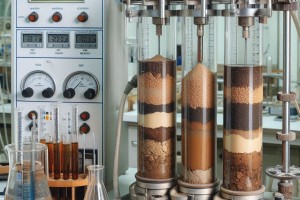
-
Unlocking the potential of soil microbial communities for bioremediation of emerging organic contaminants: omics-based approaches
The article examines the potential of soil microbial communities and advanced omics technologies to tackle environmental contamination caused by emerging organic contaminants (EOCs). These contaminants, which include pharmaceuticals, pesticides, microplastics, and industrial chemicals, present significant risks to ecosystems and human health.
Read more about "Unlocking the potential of soil microbial communities for bioremediation of emerging organic contaminants: omics-based approaches"
-
Emission of Microplastics to Water, Soil, and Air. What can we do about it?
Microplastics enter the environment through plastic-containing products. The Dutch authorities aim to identify the main sources of these emissions in the Netherlands as to develop measures to reduce microplastic emissions.
Read more about "Emission of Microplastics to Water, Soil, and Air. What can we do about it?"
-
Avoiding the Next Silent Spring: Our Chemical Past, Present, and Future
The authors explore the environmental and health impact of persistent chemicals, specifically per- and polyfluoroalkyl substances (PFAS), and compare it to Rachel Carson's 1962 book Silent Spring, which exposed the dangers of DDT and leading to stricter regulations and environmental awareness.
Read more about "Avoiding the Next Silent Spring: Our Chemical Past, Present, and Future"
-
The Global Threat from the Irreversible Accumulation of Trifluoroacetic Acid (TFA)
This study emphasizes the alarming environmental and health implications of trifluoroacetic acid (TFA), a type of perfluoroalkyl acid (PFAA), which is by far the most abundant PFAS compound in the environment. TFA, which was initially associated with the degradation of fluorinated refrigerants introduced as alternatives for ozone-depleting CFCs, has become increasingly alarming due to its widespread presence in drinking water and human blood.
Read more about "The Global Threat from the Irreversible Accumulation of Trifluoroacetic Acid (TFA)"