A review of properties, occurrence, fate, and transportation mechanisms of contaminants of emerging concern in sewage sludge, biosolids, and soils: recent advances and future trends
A review of properties, occurrence, fate, and transportation mechanisms of contaminants of emerging concern in sewage sludge, biosolids, and soils: recent advances and future trends
From pharmaceuticals to rubber antioxidants, emerging contaminants are everywhere. This comprehensive review dives into over than 400 contaminants detected in sewage sludge, biosolids and soils. Discover the auhtors’ valuable insights into their complexity, environmental fate and the urgent need for smarter detection and regulation
July 31, 2025
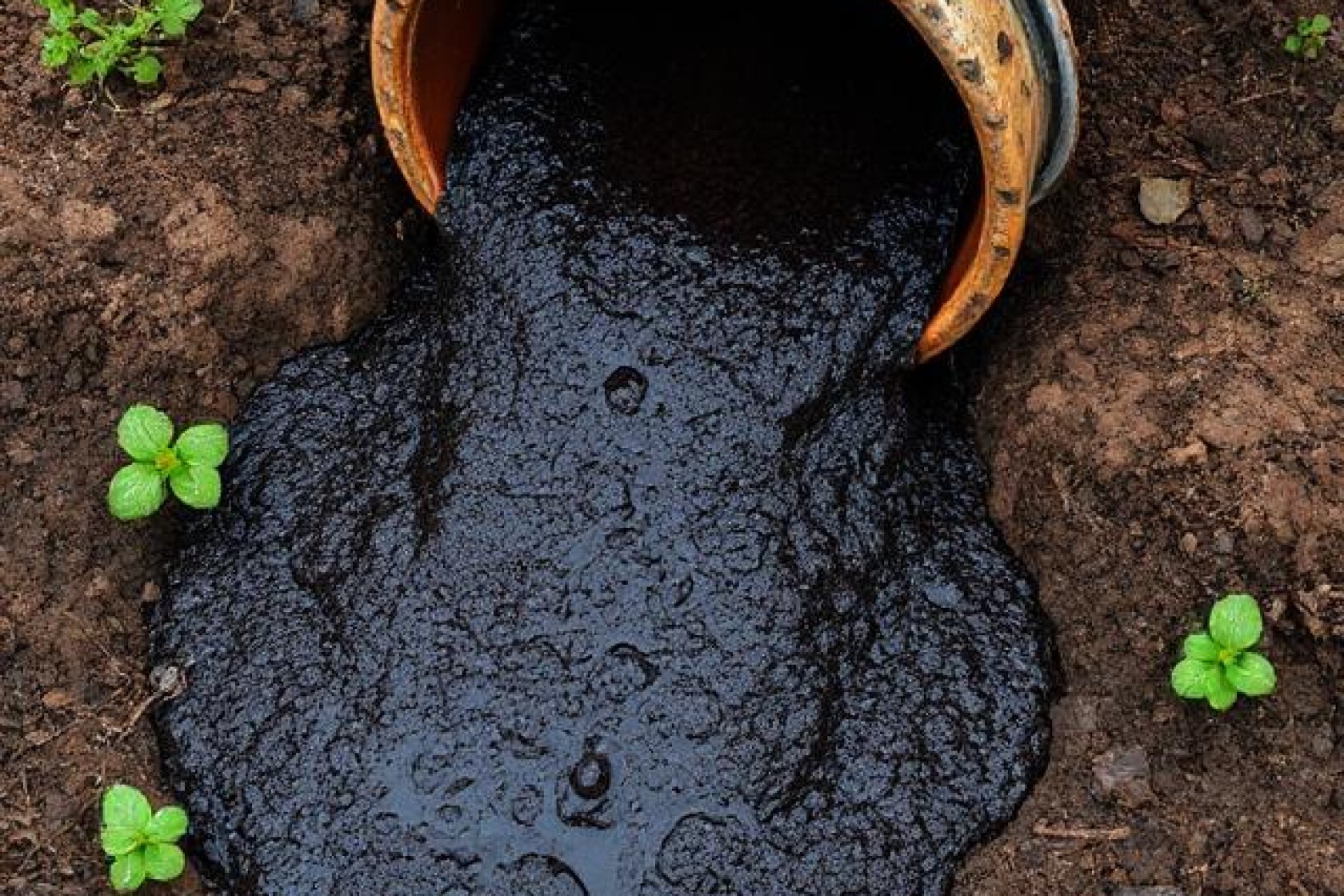
Emerging contaminants in our environment present a growing concern as their prevalence continues to rise. This comprehensive review sheds light on 419 different types of contaminants detected in sewage sludge, biosolids, soils, and dust. Among these are commonly encountered substances such as pharmaceuticals and personal care products, alongside specialized compounds like rubber antioxidants, bisphenols, and neonicotinoid insecticides. These pollutants are not only diverse but often also persistent, posing challenges for environmental management.
To address these challenges, advanced analytical techniques such as matrix-assisted laser desorption/ionization mass spectrometry imaging (MALDI-MSI) have proven invaluable. These methods enable researchers to detect and map the presence of contaminants in complex environmental samples with greater precision. Despite these advancements, significant knowledge gaps remain, particularly concerning the interactions between various contaminants and their long-term effects on soil and water systems.
Looking forward, the authors of this review emphasize the critical need for further research into the degradation byproducts of these contaminants. They advocate for the development of even more sensitive detection methods to enhance monitoring capabilities. Additionally, smarter waste treatment strategies and targeted regulations are essential to mitigate the spread of these pollutants, ensuring that the reuse of biosolids remains both sustainable and safe.
Dynamics of PFAS transport in the unsaturated zone: Insight from long-term monitoring of an AFFF-contaminated site
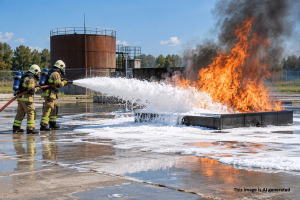
PFAS in the unsaturated zone can remain a long-term source of groundwater contamination. A two-year Danish field study shows that precipitation and infiltration, soil composition and secondary PFAS reservoirs control mobilisation and vertical transport, with distinct behaviour for short- and long-chain PFAS.
Microplastics in groundwater: An updated systematic review of occurrence, hydrogeological controls, methodological challenges, and regulatory gaps
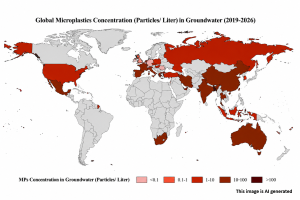
Microplastics are increasingly detected in groundwater, yet their occurrence, transport and environmental relevance remain difficult to assess. A systematic review of 82 field studies from 28 countries demonstrates their presence across a wide range of hydrogeological settings. Large differences in reported concentrations are strongly influenced by inconsistent sampling and analytical methods. Standardised monitoring is therefore essential for developing reliable groundwater quality criteria and future regulatory frameworks.
PFAS and the pollution trap: contested knowledge in environmental justice struggles
PFAS contamination is not only an environmental and health issue, but also a challenge of environmental justice and access to reliable knowledge. Based on 25 documented PFAS conflicts worldwide, this study examines how scientific uncertainty, chemical persistence and information asymmetries shape affected communities. The authors describe how the largely invisible nature of PFAS contamination can delay recognition and regulatory action. The study highlights the importance of combining scientific evidence with the experiences and knowledge of exposed communities.
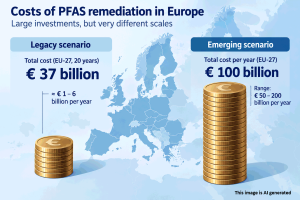
PFAS remediation across Europe: costs and limited impacts
PFAS contamination is widespread across Europe, but removing these persistent chemicals from the environment is technically difficult and extremely costly. This study estimates the costs and potential impact of large-scale PFAS remediation across the EU. Even extensive treatment of contaminated soil, drinking water, wastewater, sludge and landfill leachate would remove only a small fraction of ongoing emissions. The results demonstrate that remediation must be combined with strong control of PFAS emissions at their source.
Accumulation of PFAS in wine from a contaminated area: perfluorobutanoic acid (PFBA) as a molecular marker of PFAS groundwater contamination and implications of wine ingestion for human health
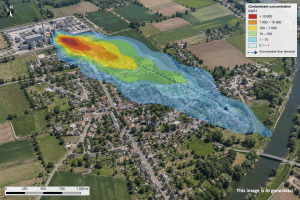
PFAS contamination of groundwater can also affect agricultural products and contribute to human exposure through food and beverages. This study investigated PFAS in wines produced within and around a major contaminated area in Northern Italy. Short-chain PFAS, particularly perfluorobutanoic acid (PFBA), were frequently detected and linked to local groundwater contamination. The results suggest that wine may serve both as a bioindicator of groundwater contamination and as a potential dietary exposure pathway.
This website makes use of cookies to function properly. If you would like to change which cookies we can use, change the cookie settings. Read more about our use of cookies in our privacy policy.