Exploratory societal cost–benefit analysis for PFAS in soil and groundwater: new study points the way toward effective policy
What are the societal and economic impact of PFAS in soil and groundwater? An exploratory study lays the foundation for further insights into the situation in Flanders.
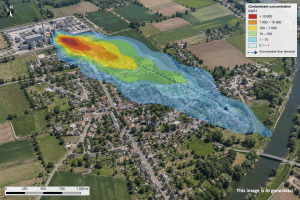
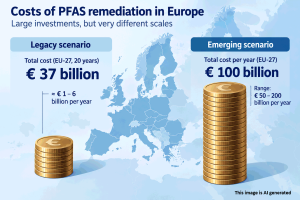
A new OVAM study explores the possibilities of asocietal cost-benefit analysis (SCBA) for PFAS policy in Flanders, with a focus on the management of PFAS in soil and groundwater. The report maps the challenge, describes economic, health, environmental, and social effects, and applies these to two cases (soil investigation and remediation, and soil excavation and relocation). The study reveals the societal impact of different response options, from doing nothing to full remediation, and highlights which measures deliver the greatest public value, which major knowledge gaps remain, and why cleaning up heavily contaminated sites and preventing new emissions are the most cost-effective strategies.
February 25, 2026
Although prevention – avoiding PFAS entering soil and groundwater – remains important, the focus of this study is on the societal costs and benefits of managing existing contamination. Not all identified effects could be quantified or monetized; where data were available, initial estimates were made. Costs proved easier to calculate than benefits, especially regarding health effects. This leads to the risk that remediation or soil excavation and relocation is too quickly deemed unprofitable, while benefits often extend over multiple generations and are difficult to measure. Therefore, no aggregation or discounting was performed. Perceptions and social effects also play a role and deserve further attention.
The study is exploratory and should not be seen as an endpoint. It emphasizes the need for better and more consistent data collection, a broader consideration of effects, and the possible complementing of SCBA with other approaches, such as the precautionary principle, risk acceptance, and multi-attribute analysis.
Read the full study here (in Dutch with English summary)
Save the date for the EmConSoil Webinar Series on the 21st and 28th of April and the 5th and 12th of May!
A new EmConSoil webinar series is coming! Get ready for inspiring talks, cutting-edge insights, and practical solutions from leading experts in emerging contaminants, contaminated soils and environmental sustainability. Four sessions are planned at the end of April (21st and 28th) and beginning of May (5th and 12th) 2026 each time from 9:00 till 10:00 CET.
Microplastics and plant health: sources, distribution, toxicity, and remediation
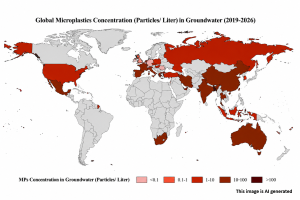
Microplastics have become widespread across the planet as plastic production continues to rise. Most plastics are not recycled, and nearly 80% ends up in landfills or the environment, where they can break down into small fragments that spread through air, water, and soil. These microplastics come from many everyday sources: synthetic clothing fibres, car tire wear, agricultural films, packaging, sewage sludge, personal care products with microbeads, and even medical waste such as disposable masks.
Understanding chemical contamination in free-range eggs: what recent research on brominated flame retardants reveals
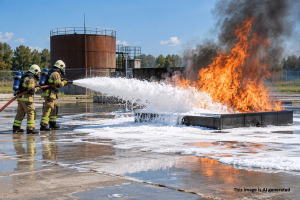
In several polluted regions, eggs from outdoor foraging chickens were found to contain brominated flame retardants (BFRs), chemicals such as PBDEs (polybrominated diphenyl ethers) and HBCDD (hexabromocyclododecane). These chemicals are often added to plastics, textiles and electronics in order to reduce fire risk. These substances, along with their toxic degradation products, known as polybrominated dibenzodioxins and dibenzofurans (PBDD/Fs), are known to persist in soil, dust and fragments of discarded materials long after the products themselves are thrown away. Foraging chickens have been found to contain brominated flame retardants (BFRs)dioxins and dibenzofurans (PBDD/Fs).
ITRC provides updated insights and technical knowledge on PFAS
The Interstate Technology & Regulatory Council (ITRC) has released an updated and expanded version of its PFAS Technical and Regulatory Web Guidance Document (PFAS1), offering its most recent scientific insights, emerging concerns, and practical lessons learned from real-world PFAS projects.
This website makes use of cookies to function properly. If you would like to change which cookies we can use, change the cookie settings. Read more about our use of cookies in our privacy policy.