The PFAS roadmap – Navigating a path together to improved management
The PFAS roadmap – Navigating a path together to improved management
‘Forever chemicals’ doesn’t necessarily mean forever problems — discover how we can tackle PFAS step by step with the PFAS roadmap
PFAS are a group of chemicals, used in countless products, from firefighting foams to textiles and industrial applications, and have become widespread in the global environment. As they break down extremely slow, accumulate in living organisms, and have toxic properties, they pose risks to both human health and ecosystems. Addressing the PFAS challenge requires more than isolated measures or quick fixes. Real progress depends on cooperation among scientists, regulators, industries, and communities. To guide these collective efforts, a PFAS roadmap has been developed by a collective of scientists, experts and consultants, consisting of 15 dedicated sections, which are built on three key pillars:
February 25, 2026
Monitor and Understand:
Better monitoring of PFAS pollution is critical, as currently available analytical methods identify only a small fraction of the thousands of PFAS in existence. Developing better analytical tools is essential for detection of PFAS at very low concentrations and the identification of previously unknown compounds. A better understanding of the movement of PFAS through soil, water and air and their accumulation in plants, animals and humans is key for more accurate risk assessments and targeted actions.
Regulate and Replace:
Regulation is challenging because PFAS include a large diversity of chemicals, each with different behaviours and associated risks. Global policies are evolving, but at inconsistent rates across different countries. Clearer classifications and harmonized policies are needed to reduce future pollution. Another key element is phasing out non-essential PFAS uses and stimulating the development of safer alternatives. This transition requires transparency, improved data sharing, and collaboration between scientists, policymakers, and industry.
Capture and Destroy:
Because PFAS are highly persistent, removing them from contaminated water and soil is technically difficult. Technologies like activated carbon, ion-exchange resins, membranes, foam fractionation, and thermal treatments can help concentrate PFAS, which improves treatment efficiencies. Destruction methods such as supercritical water oxidation, hydrothermal processes, pyrolysis, and advanced electrochemical techniques, are promising but require further development, testing, and standardization. Waste handling and long-term environmental safety remain major concerns.
Overall, PFAS management requires multidisciplinary cooperation, long-term commitment, and integrated action across science, industry and government. While scientific and technological progress has been made, significant knowledge gaps remain, and no single solution will solve the PFAS problem. The PFAS roadmap aims to guide future efforts towards effective monitoring, responsible phaseout, and reliable destruction technologies, ultimately reducing PFAS exposure for communities and ecosystems worldwide.
Webinar 1 – 2026 The Australian PFAS Cauldron – Same Contaminants, Different Journey
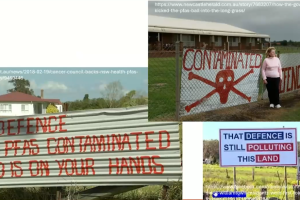
Australia offers a highly relevant case study of how PFAS contamination challenges conventional approaches to environmental governance and risk assessment. This perspective was presented by Matthew Askeland, Principal Environmental Scientist at ADE Consulting Group, and Karl Bowles, Senior Principal Environmental Scientist at Jacobs and Adjunct Associate Professor at the University of Queensland (QAEHS), both representing ALGA’s Emerging Contaminants of Concern Special Interest Group.
Webinar 2 – 2026 Drivers in the management of PFAS contaminated sites
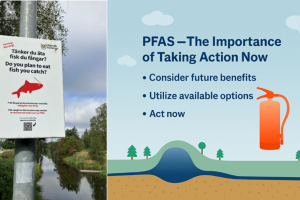
Sweden has taken a proactive, science-based approach to managing PFAS-contaminated sites, particularly those originating from historical use of aqueous film-forming foams (AFFF) at firefighting training areas. Since 2022, the Swedish Environmental Protection Agency (EPA) has coordinated a governmental assignment, in collaboration with other authorities, to enhance understanding of PFAS pollution and develop effective remediation strategies. This work remains ongoing with several years of funding secured. Niclas Johansson, project manager for the Swedish government’s national initiative on PFAScontaminated sites (RUPFO), shared the project findings during the webinar.
Webinar 3 – 2026 PFAS Risk Evaluation in Soils and Excavated Materials in Flanders
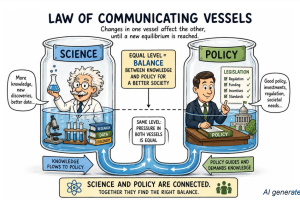
Flanders has developed a practical, science-driven system for setting PFAS limits in soil and excavated materials. This approach carefully balances the protection of human health and the environment with the practical need for soil reuse. The framework was presented by Kaat Touchant and Ingeborg Joris from VITO the Flemish institute for technological research.
Webinar 4 – 2026 Emerging Contaminant Challenges in the New European Soil Monitoring Law
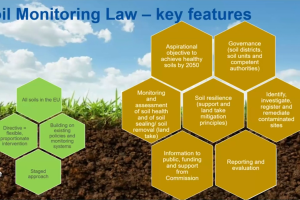
The European Soil Monitoring Law (Directive), published in the Official Journal on 26 November 2025 and entering into force on 16 December 2025 was presented by Esther Goidts, who is a soil scientist and seconded policy officer at the European Commission. Soils deliver critical ecosystem services—including food and biomass production, water purification, nutrient cycling, carbon sequestration, and biodiversity support—yet most European soils are degraded, with contamination contributing to annual economic costs exceeding €50 billion. The Directive represents a landmark step toward achieving healthy soils across the European Union by 2050. Developed to address widespread soil degradation, the Directive establishes a coherent, integrated framework for monitoring soil health, enhancing resilience, and managing contamination.
Save the date for the EmConSoil Webinar Series on the 21st and 28th of April and the 5th and 12th of May!
A new EmConSoil webinar series is coming! Get ready for inspiring talks, cutting-edge insights, and practical solutions from leading experts in emerging contaminants, contaminated soils and environmental sustainability. Four sessions are planned at the end of April (21st and 28th) and beginning of May (5th and 12th) 2026 each time from 9:00 till 10:00 CET.
This website makes use of cookies to function properly. If you would like to change which cookies we can use, change the cookie settings. Read more about our use of cookies in our privacy policy.