Webinar 1 – 2026 The Australian PFAS Cauldron – Same Contaminants, Different Journey
Australia offers a highly relevant case study of how PFAS contamination challenges conventional approaches to environmental governance and risk assessment. This perspective was presented by Matthew Askeland, Principal Environmental Scientist at ADE Consulting Group, and Karl Bowles, Senior Principal Environmental Scientist at Jacobs and Adjunct Associate Professor at the University of Queensland (QAEHS), both representing ALGA’s Emerging Contaminants of Concern Special Interest Group.
Extensive historical use of aqueous film-forming foams (AFFF) at defence installations, airports, and firefighting training facilities resulted in widespread PFAS contamination of soil, groundwater, and surface water systems. The Australian response evolved within a context of increasing public concern, rapidly changing toxicological evidence, and growing regulatory pressure, creating a dynamic and often fragmented management landscape.
A central issue in the Australian context concerns the interaction between evolving scientific evidence and regulatory adaptation. Australian authorities progressively revised drinking water guideline values and health-based investigation criteria as international toxicological data expanded and analytical detection limits improved. However, differences between federal guidance, state-level implementation, and site-specific management approaches generated inconsistencies in risk communication and regulatory interpretation. This regulatory heterogeneity complicated decision-making processes for contaminated land managers, water authorities, and affected communities.
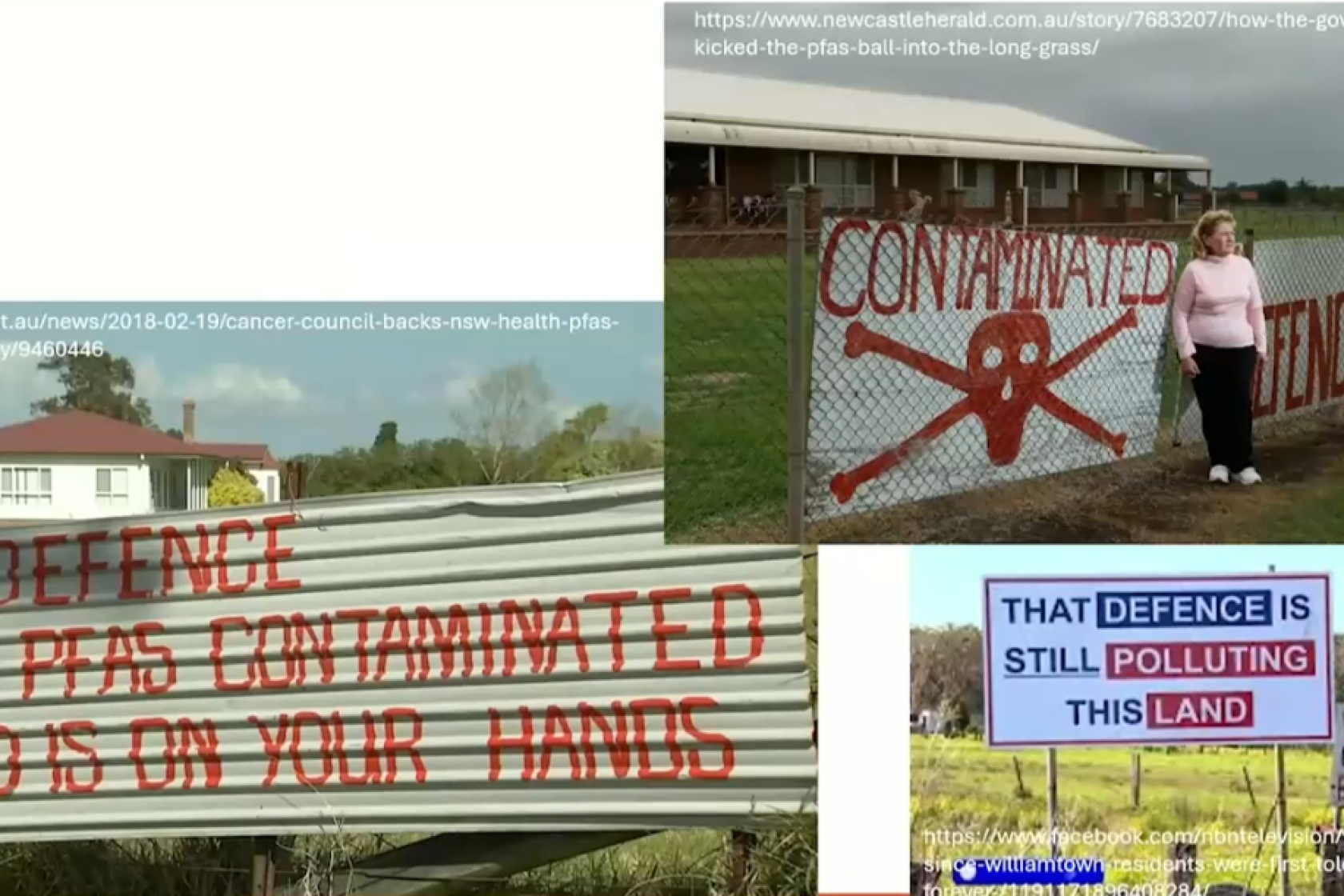
The Australian experience also demonstrated how PFAS contamination can rapidly evolve from a localized environmental issue into a broader socio-political and public health concern. High-profile contamination cases associated with defence sites significantly increased media attention and public scrutiny, particularly where potential exposure pathways involved drinking water supplies, agricultural production systems, and biosolids reuse. In several affected regions, communities challenged governmental risk assessments and demanded greater transparency regarding exposure, biomonitoring, and long-term health implications. Consequently, social amplification of perceived risk became a major driver of policy development and regulatory intervention.
From a hydrogeological and remediation perspective, the Australian situation highlighted the exceptional persistence, mobility, and chemical complexity of PFAS compounds in environmental systems. Long groundwater transport distances, diffuse plume behaviour, and strong resistance to natural degradation complicated both site characterization and remediation design. Conventional remediation technologies, including pump-and-treat systems and adsorption-based approaches, often achieved only partial contaminant removal while generating concentrated secondary waste streams requiring further management. The scale of contamination at several Australian sites therefore shifted remediation strategies from complete restoration toward long-term containment, exposure management, and adaptive monitoring frameworks.
The Australian PFAS experience further illustrated the importance of integrating environmental science with public health, risk governance, and stakeholder engagement. Technical risk assessments alone proved insufficient to address community concerns, particularly where uncertainties remained regarding chronic low-dose exposure and cumulative health effects. Authorities increasingly recognized the need for transparent communication strategies, interdisciplinary collaboration, and adaptive governance models capable of responding to evolving scientific knowledge and societal expectations. Australia therefore represents an important international example of how emerging contaminants challenge not only remediation technologies, but also institutional capacity, regulatory coherence, and public trust in environmental management systems.
Share this post!