Webinar 3 – 2026 PFAS Risk Evaluation in Soils and Excavated Materials in Flanders
Flanders has developed a practical, science-driven system for setting PFAS limits in soil and excavated materials. This approach carefully balances the protection of human health and the environment with the practical need for soil reuse. The framework was presented by Kaat Touchant and Ingeborg Joris from VITO the Flemish institute for technological research.
Flanders uses the S-Riskhuman health exposure model to calculate soil screening values. The S-risk model determines the maximum safe concentration in soil by comparing total human exposure from all relevant exposure routes against a health-based guidance value. The main exposure routes include ingestion of soil, homegrown vegetables, and animal products, as well as dermal contact with soil and inhalation of vapour and dust. Different land-use scenarios are applied, including residential, agricultural, industrial, and recreational areas.
Key factors in the calculations are health-based guidance values taken from international sources such as EFSA and EPA, with a strong focus on effects like immunotoxicity. Background exposure from diet is also included and has been updated using recent Belgian data from the FLUOREX study (Belgian scientific research project focused on assessing human exposure to PFAS through food and beverages). Ecotoxicological limits from Dutch RIVM data are considered, and the strictest value (human health or ecological) dependent of the land-use is selected as the final screening value.
The soil screening values have evolved over time. In 2020, they were based on EPA values. In 2022, the switch to the stricter EFSA 2020 guidance resulted in much lower values. In 2025, updated background exposure data from the FLUOREX study allowed residential screening values to increase. For example, the value for PFOS in residential areas rose from 4.9 in 2022 to 14.7 µg/kg* in 2025 (*excluding private vegetable garden and private gardens with chickens for egg production).
For PFAS mixtures, Flanders applies a pragmatic summation approach. In soil, the sum of 20 PFCAs is assessed as PFOA equivalents, and the sum of 19 PFSAs as PFOS equivalents. This is a simplification, as different chain lengths behave differently in soil and plants. It should be noted that the model often overestimates uptake into vegetables, so site-specific assessments using actual plant measurements are recommended for better accuracy.
Reuse standards for excavated soil are calculated using the F-LEACH model, which predicts leaching into groundwater and accumulation in soil. These standards must remain above background levels (e.g., 1.5 µg/kg for PFOS and 1 µg/kg for PFOA) while staying below the lowest soil screening value. For free reuse anywhere in Flanders, values are typically set at two to three times the background level but capped at 60–80 percent of the strictest screening value. To remain protective, in sensitive areas such as nature reserves, agricultural land, and drinking water protection zones, reuse is limited to background levels. For construction works, there is slightly more flexibility. Leaching tests can allow higher concentrations in reused soil if the leachate concentrations meet drinking water standards (e.g., 100 ng/L for the sum of 20 PFAS = EU DRWL).
The system faces several challenges. Health-based guidance values are very low, leaving limited room for additional local contamination on top of existing background exposure. There is also high uncertainty in predicting how PFAS transfers from soil into plants and animals. Handling short-chain PFAS and complex mixtures remains difficult, and carcinogenic effects (such as those identified for PFOA) are considered but often lead to extremely strict limits which are not manageable.
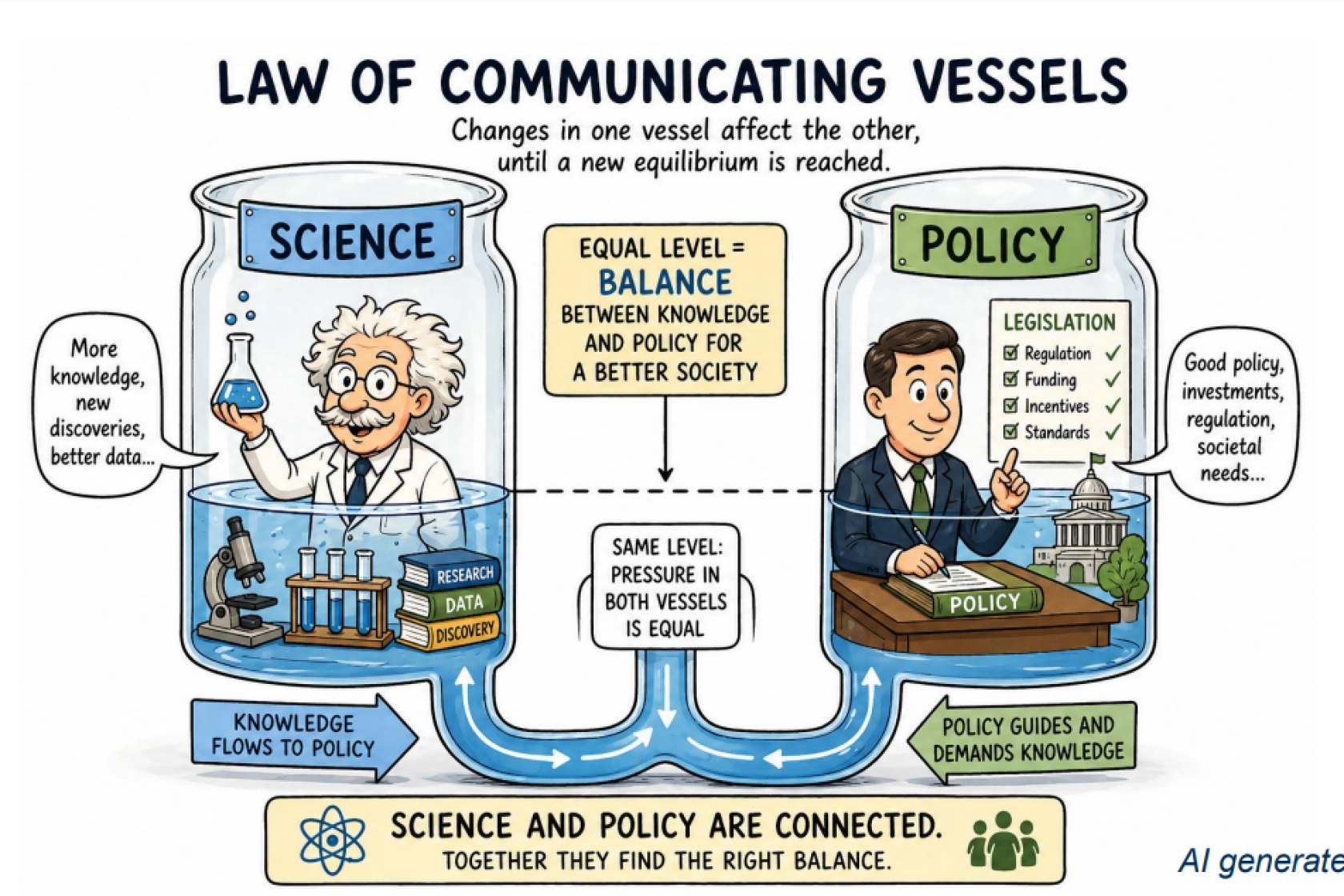
Overall, the Flemish approach demonstrates strong interaction between science and policy. Regular updates incorporate new monitoring and biomonitoring data, which show declining PFAS levels in human blood. While the strict standards support the goals of the PFAS Action Plan of preventing and reducing PFAS emissions and presence in the environment, they also create practical difficulties for soil remediation and circular economy efforts. Site-specific risk assessments and further research, including PBPK (Physiologically Based Pharmacokinetic) modelling, will be important for refining these decisions in the future.
Share this post!