Accumulation of PFAS in wine from a contaminated area: perfluorobutanoic acid (PFBA) as a molecular marker of PFAS groundwater contamination and implications of wine ingestion for human health
PFAS contamination of groundwater can also affect agricultural products and contribute to human exposure through food and beverages. This study investigated PFAS in wines produced within and around a major contaminated area in Northern Italy. Short-chain PFAS, particularly perfluorobutanoic acid (PFBA), were frequently detected and linked to local groundwater contamination. The results suggest that wine may serve both as a bioindicator of groundwater contamination and as a potential dietary exposure pathway.

The study investigated whether PFAS contamination of groundwater can be reflected in locally produced wine. The researchers analysed 76 wines produced within and around a heavily PFAS-contaminated area in Northern Italy using UPLC-MS/MS. At least one PFAS was quantified in 73 of the 76 wines, demonstrating widespread occurrence in wines from the study area. The contamination profile was dominated by short-chain PFAS. PFBA was by far the most frequently detected compound, quantified in 93,5% of the samples, with a median concentration of 196 ng/L and a maximum of 18.067 ng/L. PFPeA and PFBS were quantified in 61,5% and 51,3% of samples, respectively. In contrast, long-chain PFAS were detected in fewer than 10% of wines.
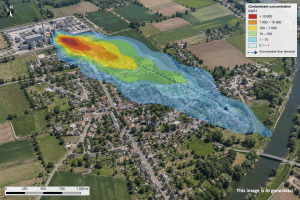
A clear relationship was found between PFAS in wine and local groundwater contamination. Wines produced in areas overlapping the known contamination plume contained significantly higher PFBA concentrations. For vineyards located within 75 m of the aquifer, a 1% increase in groundwater PFBA was associated with a 0.48% increase in wine PFBA. This spatial relationship suggests transfer from contaminated groundwater into the agricultural system.
The authors therefore propose PFBA as a molecular marker of groundwater PFAS contamination. PFBA concentrations in wine were also strongly correlated with other frequently detected PFAS, including PFPeA, PFBS and PFHxA. Wine could consequently provide information about local environmental contamination and may function as a bioindicator, particularly for mobile short-chain PFAS that can move readily through groundwater and agricultural systems.
The study also assessed potential human exposure through wine consumption. Under the highest consumption scenarios, one wine exceeded the EFSA tolerable weekly intake (TWI); when relative potency factors were applied, exceedances occurred for 3 to 8 wines. For three wines, estimated daily intake of specific PFAS exceeded corresponding oral reference doses. The authors therefore conclude that, in highly contaminated areas, wine can represent a relevant additional dietary exposure pathway and that PFAS monitoring should consider the connection between groundwater contamination, agricultural production and food exposure.
The full article is available here
Share this post!