-
Towards reduced impact of pesticides on nature and humans – knowledge integration study
From April to June 2023, a knowledge integration study was conducted by the Research Institute for Nature and Forest (INBO), in collaboration with the Agency for Nature and Forest (ANB), the Department of Environment, and the Flemish Environment Agency (VLM), examining the impact of pesticides on Flemish nature and the nature objectives, as well as their effect on humans.
Read more about "Towards reduced impact of pesticides on nature and humans – knowledge integration study"
-
Deep dive into the chronic toxicity of tyre particle mixtures and their leachates
Recent research sheds light on plastic microparticles originating from vehicle tyres as a significant environmental pollutant, potentially surpassing chronic safety limits in contaminated areas.
Read more about "Deep dive into the chronic toxicity of tyre particle mixtures and their leachates"
-
Farmers' health at risk from large cocktail of agricultural poisons
Proportionally high levels of pesticides are found in the blood of Dutch farmers, and house dust on farms contains a large amount of agricultural toxins. As European standards do not take into account overall health effects of simultaneous exposure to multiple agents, researchers fear numerous diseases.
Read more about "Farmers' health at risk from large cocktail of agricultural poisons"
-
Growing number of studies detect antibiotics, medicines and caffeine in groundwater
Issue 596 from the News Alert Service of the European Commission draws the attention to research showing that commonly used chemicals all enter the environment. Levels in groundwater across the world highlight the need to assess the risk posed by these substances.
Read more about "Growing number of studies detect antibiotics, medicines and caffeine in groundwater"
-
Recordings 2nd series of EmConSoil webinars available
After the successful first edition (which focused on addressing the Flemish PFAS crisis), the 2nd series of EmConSoil webinars addressed more general aspects of dealing with emerging soil contaminants.
Read more about "Recordings 2nd series of EmConSoil webinars available"
-
Assessment of agricultural plastics and their sustainability. A call for action
Agricultural plastic products are mostly single use and can persist in the environment long after their intended use, threatening food safety and potentially human health. A new FAO report provides irrefutable evidence to support action towards the better management of plastics in agrifood systems.
Read more about "Assessment of agricultural plastics and their sustainability. A call for action"
-
The Critical Role of Commercial Analytical Reference Standards in the Control of Chemical Risks
As more new chemicals occur in the environment there is a growing need for reference standards to be able to assess toxicity, set limits and develop policies.
Read more about "The Critical Role of Commercial Analytical Reference Standards in the Control of Chemical Risks"
-
Impacts and mechanisms of biochar on soil microorganisms
Biochar is well known for its positive effect on treating polluted soils, but on the other hand a negative impact on biota in the soil can be observed also.
Read more about "Impacts and mechanisms of biochar on soil microorganisms"
-
Release of poly- and perfluoroalkyl substances from AFFF-impacted soils: Effects of water saturation in vadose zone soils
The study takes a closer look at leaching and retention of PFAS from contaminated soils collected in the field and tested under different rainfall conditions.
Read more about "Release of poly- and perfluoroalkyl substances from AFFF-impacted soils: Effects of water saturation in vadose zone soils"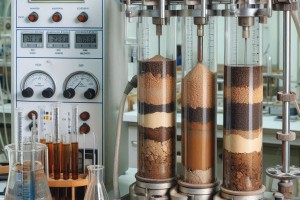
-
Biodegradation of polypropylene microplastics by Bacillus pasteurii isolated from a gold mine tailing
Research shows that bacteria can aid in the biodegradation of microplastics in soils and that the result can be boosted with microbially induced calcium carbonate precipitation.
Read more about "Biodegradation of polypropylene microplastics by Bacillus pasteurii isolated from a gold mine tailing"