
ENSOr v7
Emerging Contaminants: Protecting Human Health and Building Societal Resilience.
Save the date, call for abstracts is open!
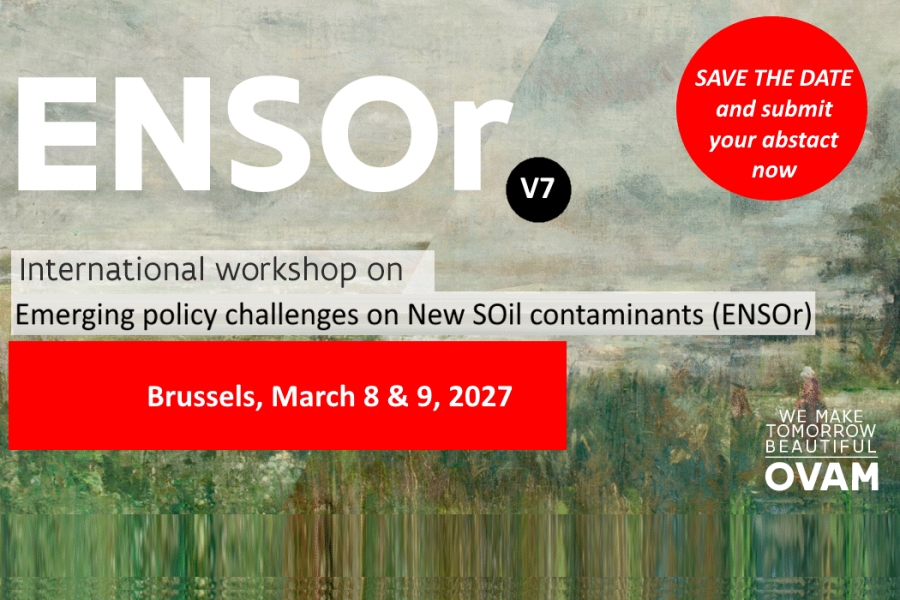
Emerging Contaminants: Protecting Human Health and Building Societal Resilience.
The impacts of emerging contaminants are no longer limited to environmental science alone. Chemicals or materials such as PFAS, pharmaceuticals, pesticides, microplastics and many other contaminants increasingly affect human health, drinking water resources, food production, environmental quality, public confidence and policy decisions.
Addressing these complex and intertwined challenges requires more than scientific presentations. It demands dialogue between disciplines, sectors and stakeholders.
The central theme of the 7th ENSOr conference is: Emerging Contaminants: Protecting Human Health and Building Societal Resilience
ENSOr 2027 will therefore focus on interaction, dialogue and interdisciplinary exchange, creating a platform where scientific knowledge, practical experience and societal perspectives come together to discuss future solutions.
We invite contributions
We welcome contributions addressing all aspects of emerging contaminants and their implications for human health and society.
While oral presentations and short pitches are welcome, interactive workshop proposals are particularly encouraged. We believe that workshops offer the best opportunity to exchange experiences, explore different perspectives, identify knowledge gaps and stimulate collaboration across disciplines and sectors. To encourage interdisciplinary collaboration, the ENSOr organising committee is happy to facilitate the development of workshop proposals. If multiple contributors express interest in a similar topic, we can help bring them together to develop a joint workshop proposal.
We particularly encourage workshop proposals that:
-
stimulate active discussion and audience participation;
-
bring together different disciplines and stakeholder groups;
-
explore scientific, regulatory, technical and societal challenges;
-
share practical experiences and lessons learned;
-
identify future research and policy priorities;
-
encourage dialogue on risk communication, public perception and stakeholder engagement;
-
develop collaborative approaches for protecting human health and the environment.
Interactive formats may include:
-
facilitated workshops;
-
round-table discussions;
-
panel debates;
-
case-study discussions;
-
breakout sessions;
-
World Café sessions;
-
co-creation workshops;
-
audience participation using interactive tools.
Suggested topics include, but are not limited to:
-
Human health impacts of emerging contaminants
-
Emerging contaminants in soil, groundwater impact in natural resources
-
Exposure pathways and human biomonitoring
-
Food safety and agricultural impacts
-
Environmental monitoring and analytical methods
-
Risk assessment and uncertainty
-
Regulatory developments and policy implementation
-
Risk communication and public engagement
-
Social acceptance and stakeholder involvement
-
AI supporting emerging contaminants assessment and management
Contribution formats
We invite submissions of abstracts for:
-
Interactive Workshops (preferred format)
Facilitate a 90-minute interactive session designed to engage participants through hands-on activities, group discussions, or collaborative exploration of real-world experiences and challenges. The outcome of the workshops will be presented in a summary session at the final day of the conference
-
Oral Presentations
Present your research, case study, or policy insight in a 15-minute presentation followed by Q&A.
-
Pitches
Share a concise 4-minute pitch highlighting a new idea, early-stage project, innovative solution, (new) remediation technique, or provocative question for the community
Abstract submission deadline: 30 September 2026
To foster discussion, collaboration and interdisciplinary exchange, ENSOr 2027 gives priority to interactive workshop proposals. While oral presentations and lightning talks are welcome, workshops will receive preference during programme development.